

There is no simple carrying capacity figure for any wildlife species, and the number is in constant flux. The truth is, we need to think outside the box; Yellowstone National Park is drawn like a box, and it neither reflects the ecosystem nor the needs of the animlas that are part of that ecosystem.
The tremendous influence natural variations have on sustainable population levels must be taken into account when contemplating carrying capacity. Weather patterns such as wet seasons, times of drought, harsh winters or milder winters impact populations. Predator-prey relationships also alter the picture. Carrying capacity is wrongly being considered only for the Park, within a political boundary invisible to wildlife, rather than being extended to adjacent public lands (i.e. Gallatin National Forest) from which buffalo are systematically excluded.
A figure of 3,000 buffalo, cited in the Interagency Bison Management Plan, is frequently touted as a carrying capacity. It is not. Rather than being based on available habitat or sound science, this figure is politically derived.
A National Academy of Sciences study conducted in 1998 determined that “even at 3,500 bison, little or no evidence exists to indicate that forage quantity or quality is inadequate.” The report goes on to say that even if the buffalo population has enough forage to maintain itself above 3,000 animals, natural weather factors that prevent buffalo from accessing that forage, such as deep snow, will cause them to migrate to lower elevations, and out of the Park.
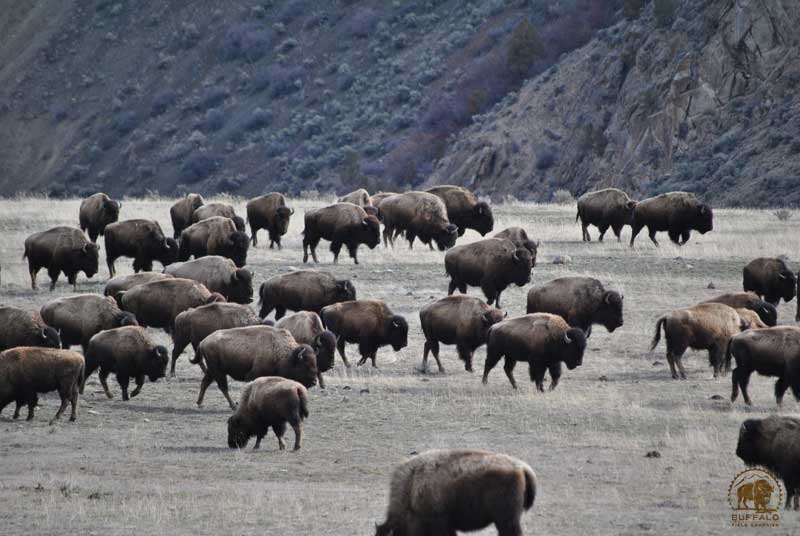
The 3,000 buffalo constraint is simply being used to make it more convenient for buffalo to be managed, at the expense of the wild nature and genetic integrity of America’s last wild and unfenced herd. Further, the Park Service has a clear statutory mandate for noninterventionist wildlife management. In other words, natural factors are intended to regulate the size, distribution, movement patterns, and habitat use patterns of wildlife within our parks.
What is known for certain is that, due to yearly killing, over 3,500 buffalo have been slaughtered in the ten years since the Interagency Bison Management Plan has been in effect. When buffalo migrate beyond the Park and enter Montana, Department of Livestock officials take charge. Instead of wildlife biologists, brand inspectors control wild buffalo, and biologists don't have a chance to evaluate restoring natural populations in the ecosystem.
The overpopulation argument is made for buffalo, elk, and other ungulates. The park is said to be overgrazed, yet for at least the past century, there's arguably been no better place in the United States to witness wildlife than Yellowstone National Park. It is now, and for decades has been, America's wildlife Serengeti. The notion that the Park is overpopulated and the buffalo population unsustainable is simply not true.
Montana has a grand opportunity that would be the envy of the entire country; Instead of driving a policy to kill America’s last wild buffalo for reasons that have little to do with disease or population control, Montana could be the only state to boast a truly wild, free-roaming herd of buffalo. Buffalo are the icon of the West, and Montana should consider celebrating them as its national mammal. Montana can end the buffalo slaughter that began in the 19th century once and for all. Montana has the wisdom and national support to make it happen.
Now that your questions about wild bison are answered,
will you join the fight to defend them?
