
According to Dr. Joe Templeton of Texas A& M University’s Department of Veterinary Pathobiology, in remarks made to the Greater Yellowstone Interagency Brucellosis Committee (GYIBC) on May 21, 1998:
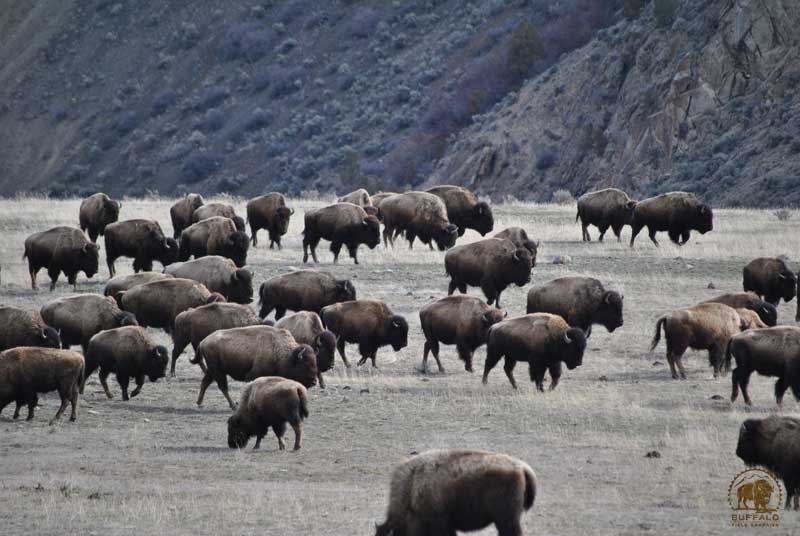
 "The so-called random shooting at the Montana borders is actually eliminating or depleting entire maternal lineages, therefore this action will cause an irreversible crippling of the gene pool. Continued removal of genetic lineages will change the genetic makeup of the herd, thus it will not represent the animal of 1910 or earlier. It would be a travesty to have people look back and say we were 'idiots' for not understanding the gene pool."
and
"Bison have developed a natural resistance, genetically, as long as they have enough to eat, limited stress, and are not consumed by other diseases. There is no magic bullet in wildlife disease, therefore management is important. Vaccines are one management tool and one component, but genetic structure is necessary for future management. Every animal which is removed from the breeding population can no longer contribute to the genetic variability of the herd."
"The so-called random shooting at the Montana borders is actually eliminating or depleting entire maternal lineages, therefore this action will cause an irreversible crippling of the gene pool. Continued removal of genetic lineages will change the genetic makeup of the herd, thus it will not represent the animal of 1910 or earlier. It would be a travesty to have people look back and say we were 'idiots' for not understanding the gene pool."
and
"Bison have developed a natural resistance, genetically, as long as they have enough to eat, limited stress, and are not consumed by other diseases. There is no magic bullet in wildlife disease, therefore management is important. Vaccines are one management tool and one component, but genetic structure is necessary for future management. Every animal which is removed from the breeding population can no longer contribute to the genetic variability of the herd."
Dr. Templeton’s statements about lineages and the gene pool of genus “Bison Bison” are directly relevant to our efforts to have threatened or endangered status of this long beleaguered species formally recognized with an Endangered Species Act listing. While he does not explicitly state the reason for his concern about “Every animal which is removed from the breeding population...”, the implication is that there are so few wild buffalo in existence that EVERY SINGLE ANIMAL is a genetic necessity if we are to ensure this species’ survival! That is why we fight so hard, and that is why we need your help. Okay, back to the science...
Population Explanation
The Yellowstone bison population currently exists as an isolated "meta-population." This is what population geneticists call a population which consists of several small groups, referred to as "subpopulations," which interact with each other to some degree. Each subpopulation within the meta-population can have its own distinctive genetic structure which distinguishes it from the others. If individuals remain in their own respective subpopulation and do not mate with outside individuals, certain genes within the subpopulation become fixed.
In other words, in isolation they lose alternative genes normally obtained through random mating and selection. This eventually leads to a loss of genetic variation in the subpopulation. If there is inter-sub-herd migration, and mating of individuals at a moderate rate between the subpopulations, then genetic variation can be maintained throughout the entire meta-population. This is most ideal, as long as the genetic exchange never includes hybridized animals.
Variety is the (Genetic) Spice of Life
Genetic variation is critical to the long-term survival and evolutionary potential for any species or population. It can become decreased through isolation, inbreeding, and strong selective pressures such as environmental changes, habitat loss, diseases, or extensive mortality.
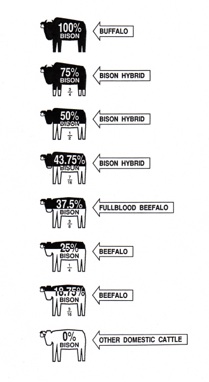
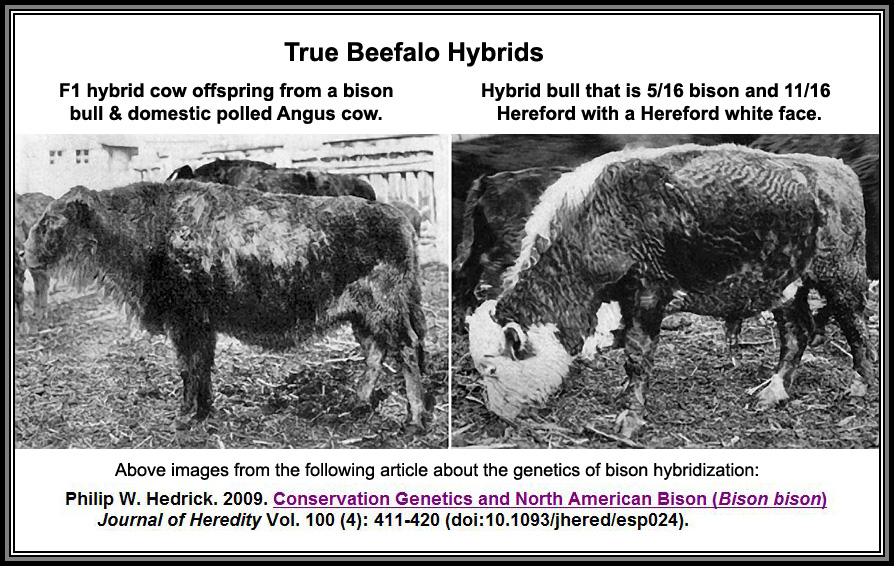
Loss of genetic variability removes genes from the population that could enable certain individuals to survive a major event, reproduce, and pass on their genetic material to the next generation. Low genetic variability within an individual or population greatly reduces the ability to respond to a major disease event or adapt to changing environmental conditions. Ultimately, this will drive them into an extinction vortex from which they might not recover, and “beefalo” hybridization is just another huge risk factor. Genetic degradation or loss of variability has already occurred in many wild species which have disappeared from the globe.
“Must” we ever “Cull?”
The current "clear cut" style of removing bison from the Gardiner area poses a grave risk to the genetic integrity of the entire Yellowstone bison herd for a number of reasons. Perhaps the most tragic part is that the northern herd subpopulation was nearly wiped out in 1996/97.
The current herd probably consists of remnant individuals and migrants from other adjacent Yellowstone subpopulations. Removal of a large number of individuals from only one subpopulation within a single region poses the risk of permanent loss of entire lineages—a potentially irreplaceable loss to the species.
If population control were ever truly necessary (which we, for the record: doubt severely), then a scattered, random removal of individuals would probably be more conducive to maintaining genetic diversity. However, the carrying capacity for bison in the Greater Yellowstone ecosystem has not been accurately established.
“Ideal Numbers” - and How We Get There
Therefore, the current population cap of 3,000 is an arbitrary human-generated number: it is not based on science, and is not representative of what the ecosystem can actually support. If the efficiency of bison grazing patterns and their remarkable ability to extract the most nutrition from the lowest quality forage is considered in conjunction with potential availability of public lands, this number should be much higher.
Because wild buffalo naturally travel in small herds (think family subgroup), the cumulative effects of yearly removals of entire large groups of bison within an isolated population result in a steady erosion of genetic integrity within this herd. This is a national tragedy and will ultimately result in the demise of this magnificent national treasure!
We must urge our public officials to discontinue the slaughter of Yellowstone bison in this manner. We cannot allow this recurring winter nightmare to continue.
It is key to the survival of the last wild buffalo and its future generations that current removal (slaughter) operations are immediately stopped. Prevention of further herd reductions will ultimately contribute to the conservation of these small herds, and augment global biodiversity.
We will continue to offer you more science, but right now we need you to act! Will you help us protect the last wild buffalo herds?
Yes! I’m ready to defend wild buffalo!

